AR sky overlay
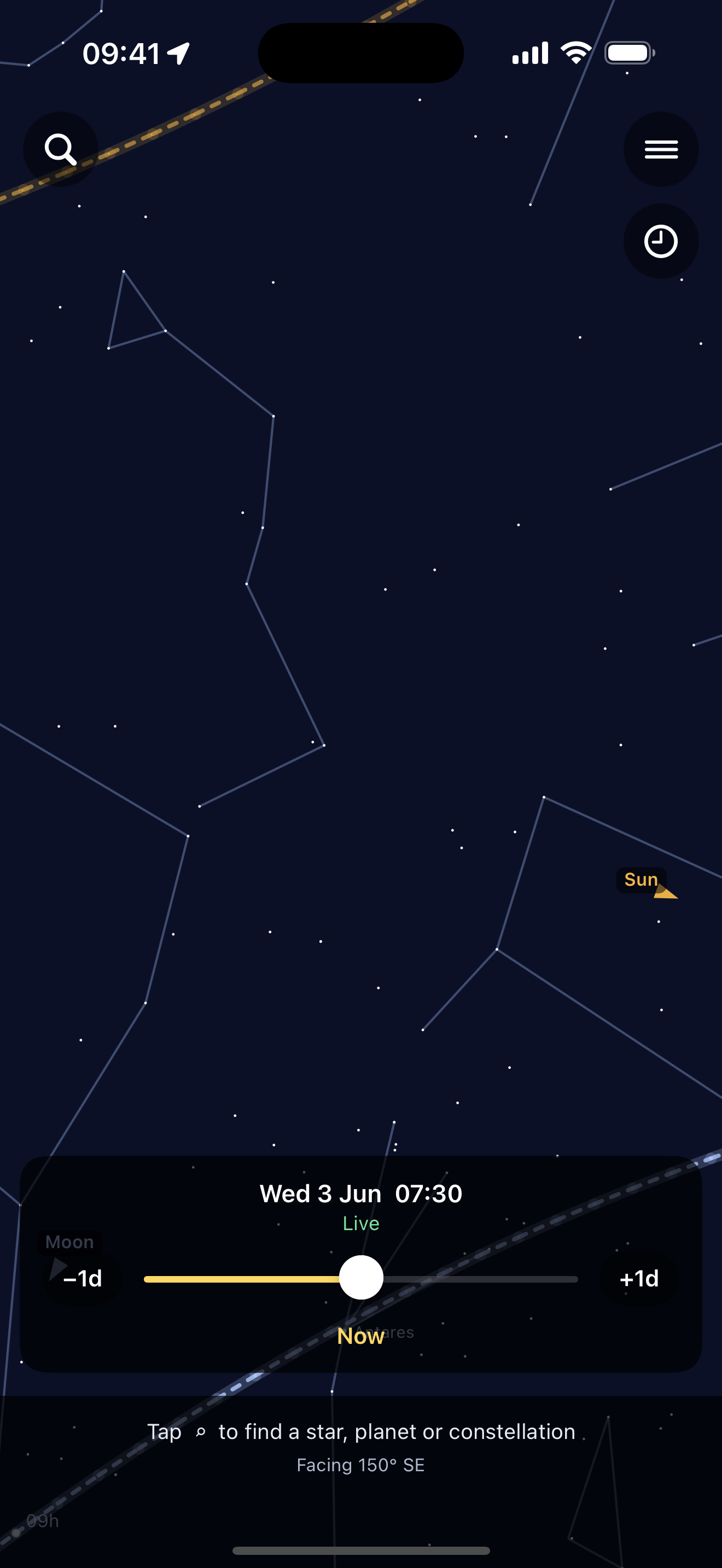
The camera feed is the background; sky objects project onto it from your device's orientation. When a target is off-screen, an arrow points the way.
Hold your phone up to the sky and watch the universe appear over the live camera.
Sky Scry overlays the Sun, Moon, planets, stars, constellations and deep-sky objects onto your camera feed, placed with your device's orientation sensors and GPS. A cloud-aware visibility score tells you when it's worth looking up.
No accounts · No ads · No tracking · Works offline
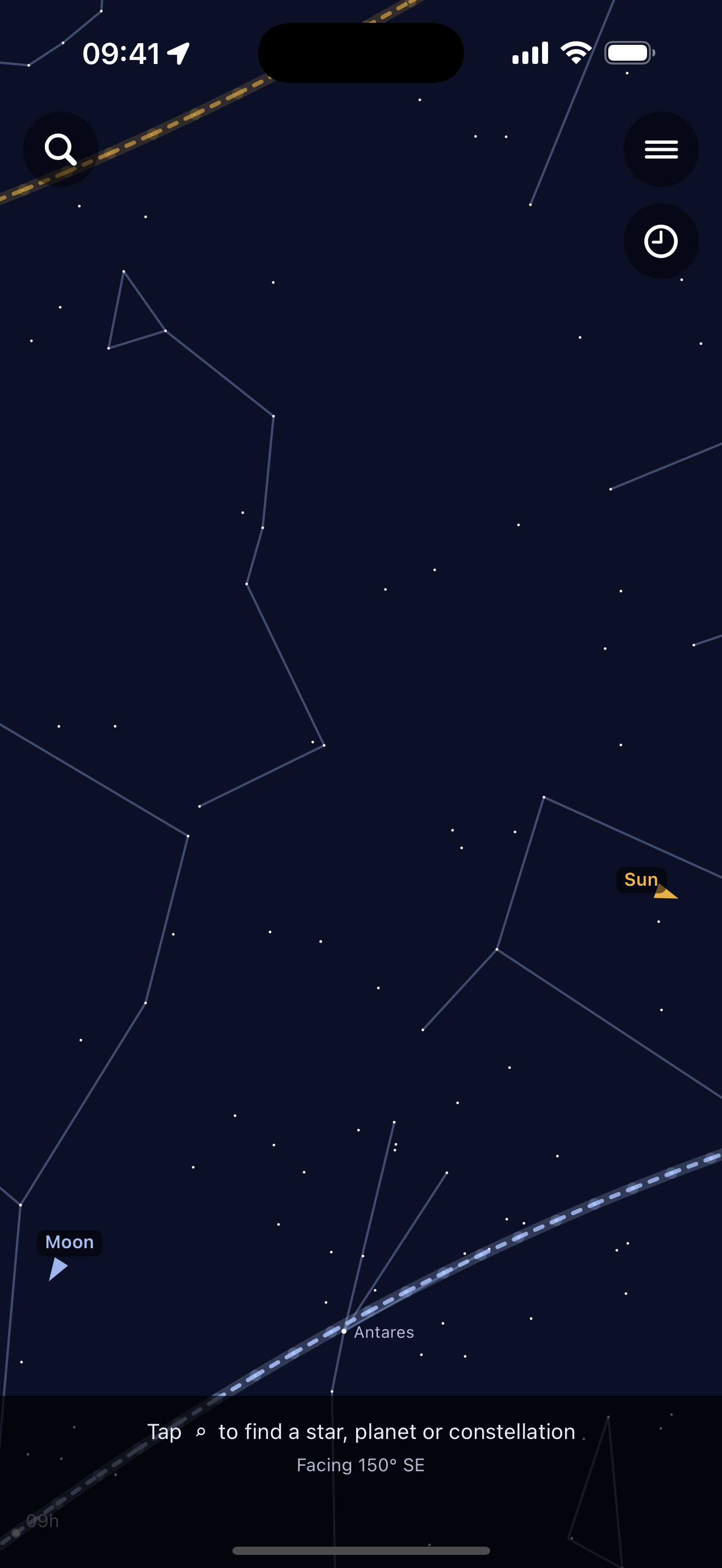
The camera feed is the background; sky objects project onto it from your device's orientation. When a target is off-screen, an arrow points the way.
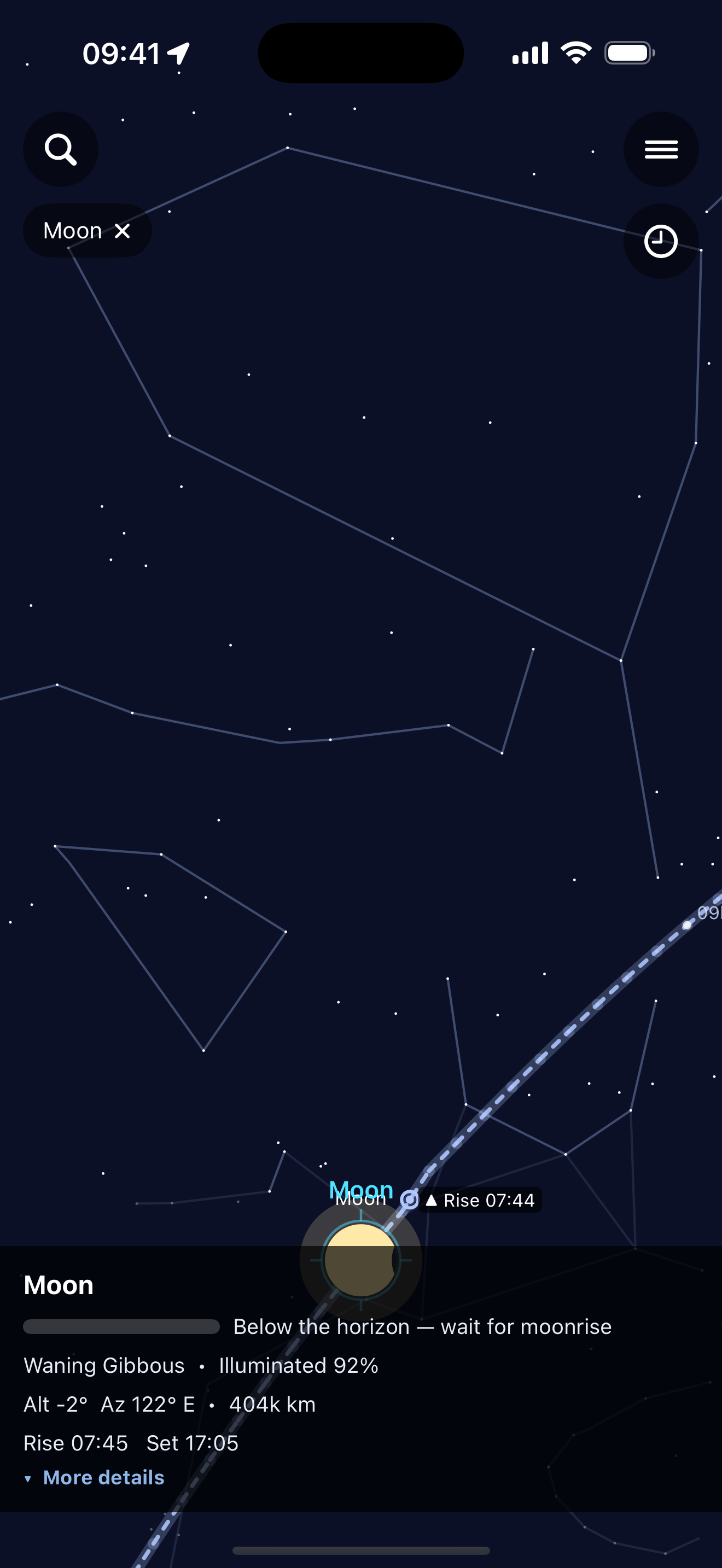
Rise/set times, and for the Moon: phase, illuminated fraction, distance, and a cloud-aware visibility score.
Mercury through Neptune, with magnitude and position from an orbital model.
~8,900 stars to magnitude 6.5 from the HYG database, plus all 88 IAU constellations with line figures, names and mythology.
The 110 Messier objects with type, magnitude, size and per-object notes; headliners ship with a bundled photo.
14 major satellites of Mars, Jupiter, Saturn, Uranus and Neptune.
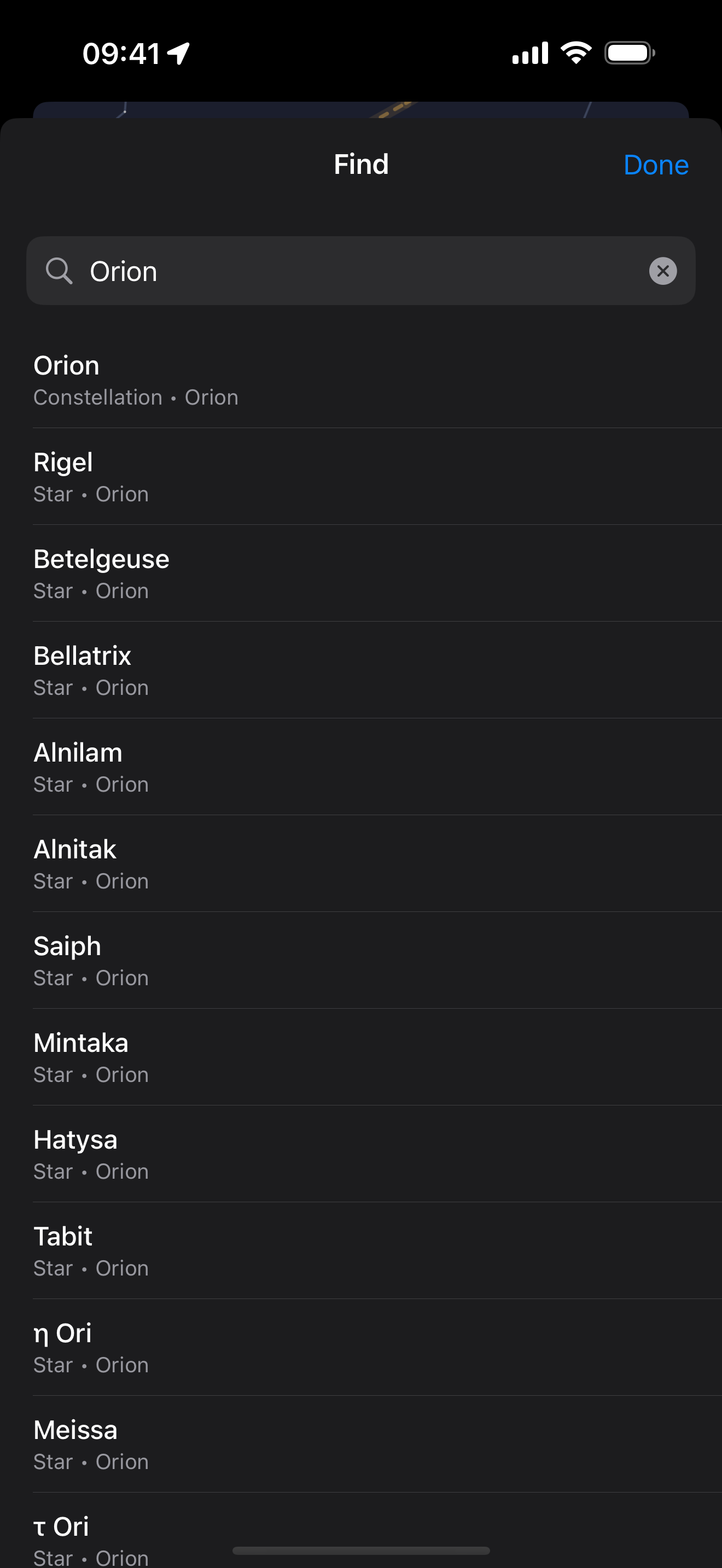
Prefix search across bodies, named and Bayer stars, constellations, satellites and Messier objects.
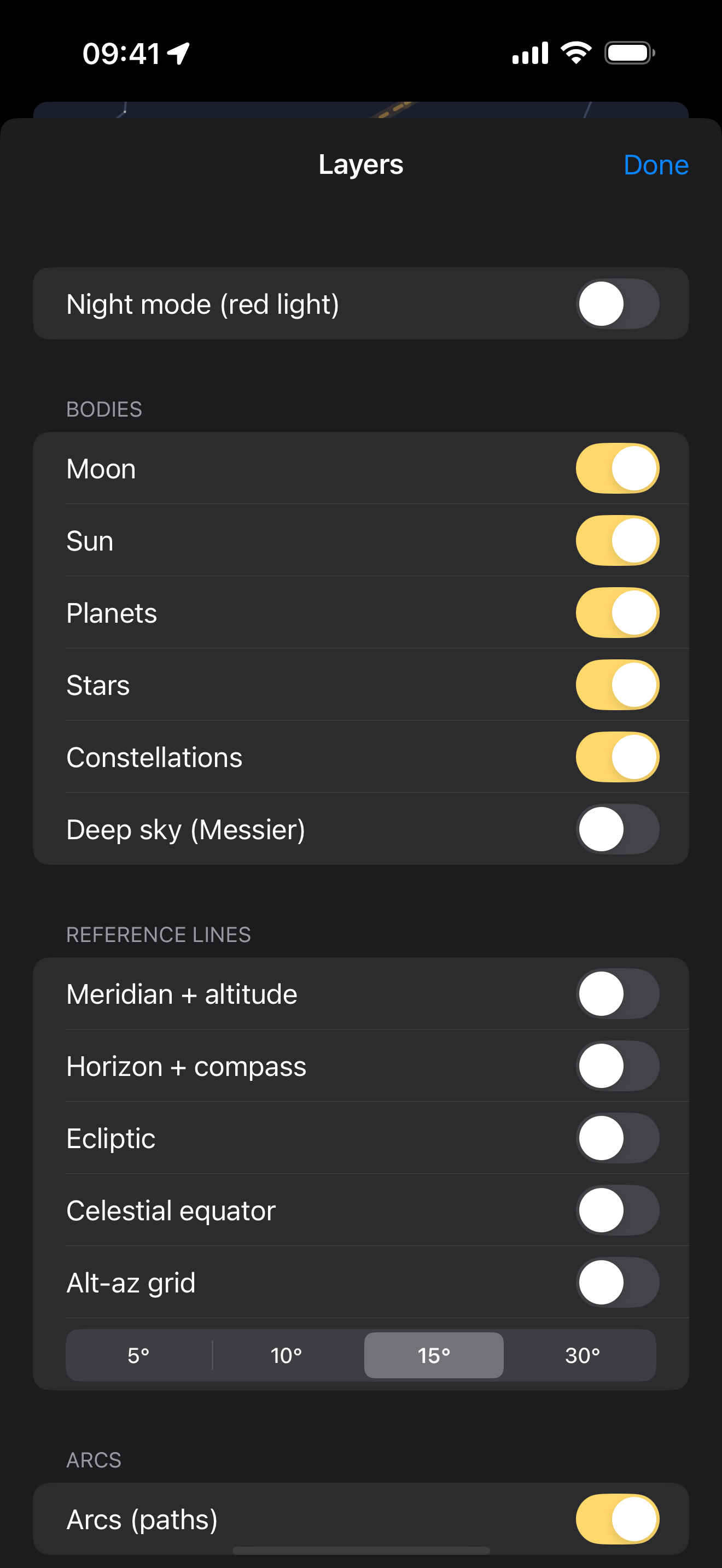
Ecliptic, celestial equator, meridian, horizon and a coordinate grid, all toggled from a layers panel.
A slider scrubs ±3 days to preview the sky at any moment.
A red filter that preserves your dark adaptation.
Current and hourly cloud cover from the free Open-Meteo API (no key), folded into the visibility score.
Applies local magnetic declination so the overlay aligns with the real sky.
No accounts, no ads, no analytics, no servers operated by us. Camera frames are processed on-device and never recorded or transmitted. The only thing ever sent off your device is your approximate location to Open-Meteo, solely to fetch local cloud cover.
Read the privacy policy